
007: how AI shapes succession planning
the four pillars of investment, philanthropy, entrepreneurship, and family governance


‘I don’t give a damn about AGI arriving in 2032.’
My mentor leaned back, a mischievous twinkle in his eye.
‘If I asked my kids to take over my business now and they told me their plan was to—what was that fancy term you used?’
Sheepishly, I replied: ‘Orchestrate autonomous AI agents.’
‘Right. That.’ He shook his head.
‘Unless you show me how AI instills in my kids:
an entrepreneurial drive to be great;
a desire to contribute to the family legacy; and
how to build my trust in them by balancing these two at all times.
‘Otherwise, I don’t see how AI is going to help me with my succession planning.’
Millennials like me always pick fights with boomers.
Allow me to make a case for how AI shapes succession planning via:
Investment
Philanthropy
Entrepreneurship
Family Governance
AI in Investment
The more money you make for your family, the more they trust you to manage the family wealth.
(I don’t make the rules here)
AI ruled private markets in 2025, where LLM household names experienced significant markups.
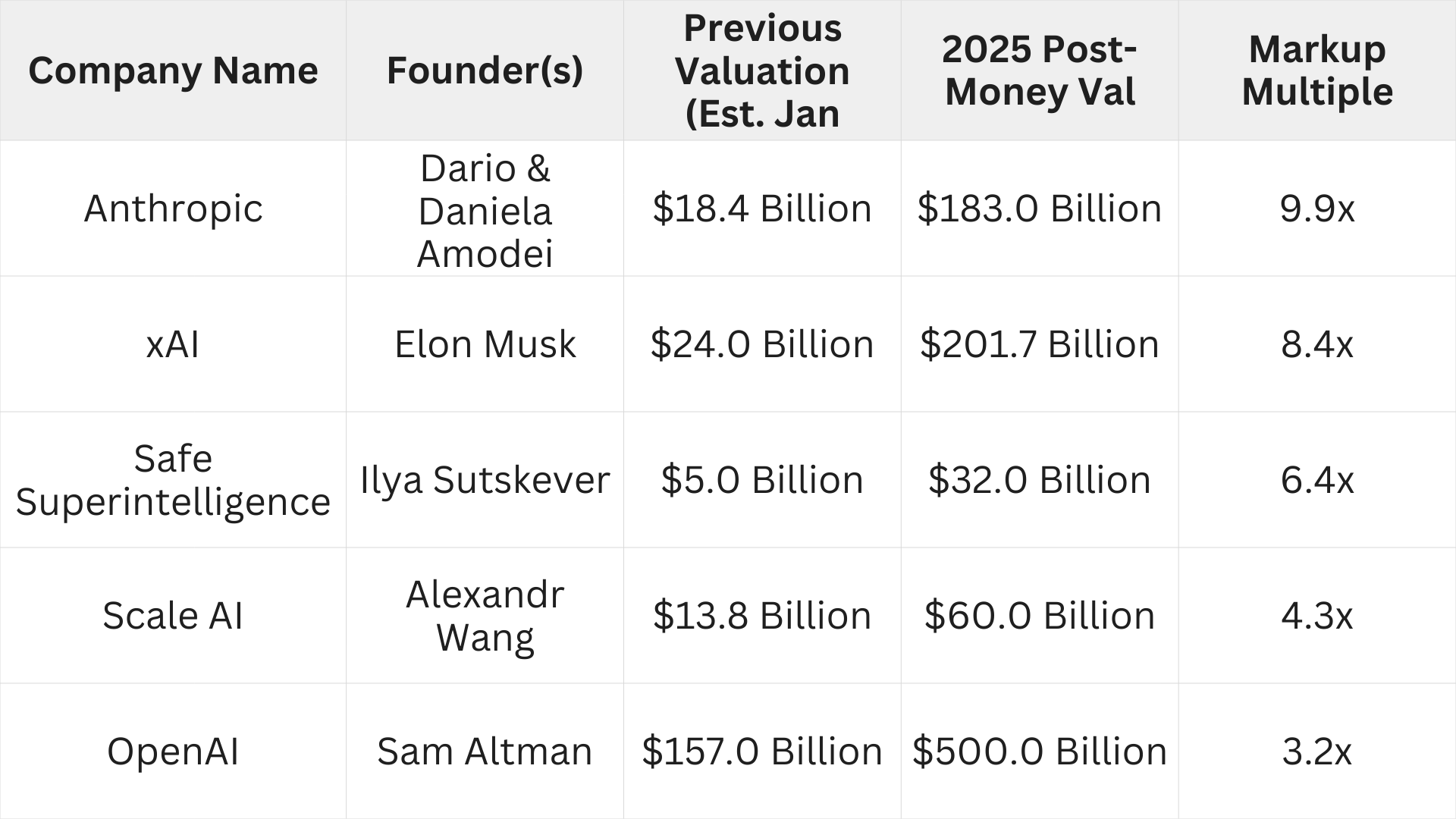
Paper gains, predatory fees, and a generous suspension of disbelief around these multi-billion valuations aside, investing in these companies probably gave you a decent credibility boost as your family’s AI expert.
(Note: Especially Anthropic in 2026. Last week they just closed a $30 billion Series G round, at a $380 billion post money valuation. This bumps the markup multiple to a cool 21x.)
Luckily, even the most diversified of exposures in public equities also benefitted from AI tailwinds in 2025.
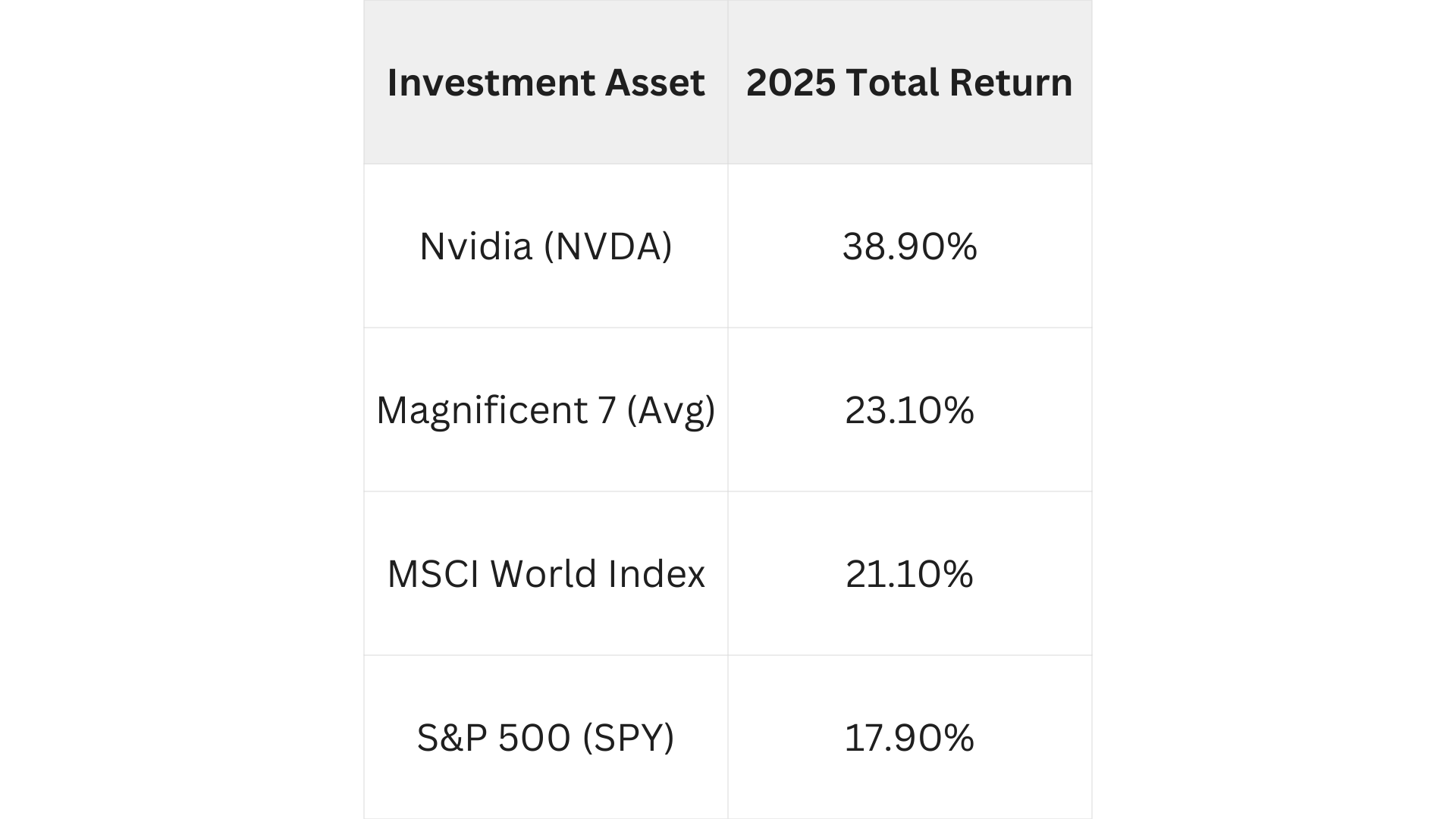
Will AI still make money for you in 2026?
Ask your trusted investment professionals (and certainly not me).
AI in Philanthropy
The more you ask your family to give away money, the less they trust you to manage the family wealth.
(I’m just joking. Or am I...?)
It’s a long shot to make AI part of your theory of change that underpins your philanthropic strategy.
Funding AI alignment and related AI safety research is usually out of mandate for most private family foundations.
If you know any, please point them my way.
AI in Entrepreneurship
The more you build with AI, the more they trust you to navigate the future.
You may care a lot about whether your project
aligns with or diverges from the family business;
monetises or not; or
might become obsolete.
But your family probably cares more about how building this business shows your:
entrepreneurial drive to will it into existence;
willingness in getting your hands dirty to sell this solution; and
moral fortitude to take risks while bearing the family name.
AI in Family Governance
The more self work you put in with the help of AI, the less trauma hindering you from believing in the value of building trust with your family.
A senior family governance advisor at a leading Swiss Bank once described to me the most common activity she performs for his clients.
It’s not setting up legal trusts. Nor is it drafting family constitution documents.
Instead, she spends most of her time
running workshops to get families articulating their values
facilitating dialogue between parents and children to address intergenerational trauma
mapping the spiritual capital, human capital, and other forms of non financial capital that defines the family.
To be fair, this advisor’s decades long track record of working for large billionaire families is the primary reason why patriarchs and matriarchs are willing to become this vulnerable. For boomers, AI agents simply don’t have the level of credentialing and social proof.
What about us the rising generation? Are we ready to conduct our own emotional due diligence with the help of AI? Is AI able to deliver the advisor’s work at a fraction of the cost?
Perhaps we can take the first step towards cultivating the emotional literacy needed for a family to flourish across generations.